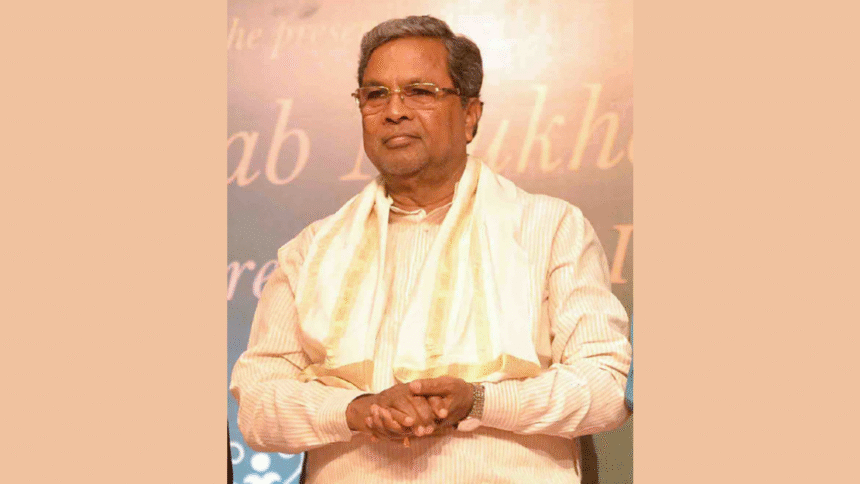

As the political noise and factional activities grow louder in the Karnataka Congress unit, Chief Minister Siddaramaiah is said to have asked the party high command to shed light on the reported moves to effect a change of guard. Unrelenting speculation, primarily instigated by loyalists of D. K. Shivakumar, has caused consternation within the ruling party at a time when it is close to achieving key administrative targets.
According to senior party insiders, Siddaramaiah feels the ambiguity over the chief ministership is diverting the attention of the government from its governance agenda, especially the implementation of flagship welfare schemes and delivery of pending promises. Sources say he has conveyed to central leaders that a formal stand by the high command alone will avoid further confusion and ensure administrative stability.
Ever since coming to power in Karnataka in 2023, the government led by Congress has been characterized by a delicate balance of power between Siddaramaiah and Shivakumar. While Siddaramaiah took over as the Chief Minister purely on account of his vast administrative experience and mass appeal, Shivakumar-the organization’s backbone in the state-was made Deputy CM, carrying a lot of responsibilities and expectations. But with time, the internal pressure from the loyalists of Shivakumar has increased, with many contending that such a “rotational CM” understanding existed, though the Congress leadership had never acknowledged it on record.
If anything, the unabated public statement binge of the Congress legislators has further escalated this. A few days ago, a known MLA claimed he was “200% sure” that Shivakumar would soon take over the top post. Such declarations, while politically charged, created visible discomfort in the senior leadership of the party, forcing Siddaramaiah to seek immediate intervention from the central command.
Political analysts believe this situation reflects the long-running power tussle between the two leaders-each with their strong base and influence. Siddaramaiah enjoys broad support across backward communities and has built his political identity around welfare-driven governance. Shivakumar, on the other hand, is recognized as an organizational powerhouse with financial clout, grassroots mobilization skills, and strong backing from the Vokkaliga community. Thus, the Congress high command finds itself managing not just administrative decisions but intricate caste and regional equations.
Meanwhile, opposition parties have seized the moment to question the ruling party’s stability. The BJP has accused the Congress government of being more focused on internal rivalry than public welfare, with several leaders pointing out the increasing frequency of political statements that hint at leadership change. They claim that such instability could hamper Karnataka’s investment climate, particularly as the state is competing aggressively with Tamil Nadu, Telangana, and Maharashtra to get global manufacturing and technology investments.
For now, Siddaramaiah remains firm in his position that the government must stay focused on developmental priorities. He has been actively pushing for progress on infrastructure projects in Bengaluru, drought-relief measures in rural districts, and expanding the reach of flagship schemes like Gruha Jyothi and Anna Bhagya. He is said to have emphasized to the party high command that any ambiguity around leadership shifts could weaken the administration’s delivery and create avoidable speculation.
For its part, the Delhi leadership in Congress has maintained a stoic silence. Though leaders concede to the internal pressures in Karnataka, they seem to steer away from disturbing the arrangement of things with various national electoral challenges ahead. Party insiders say the central command favors stability over experimentation and is aware of the risks of upsetting either Siddaramaiah or Shivakumar at this crucial juncture. Notwithstanding this speculation, many in the Congress feel that a mid-term change in the leadership is unlikely, except if forced by some compelling political reason.
The central leadership of the party may instead set more clear lines for the MLAs’ public utterances on the need for discipline, given the speculation generated through the media. As things stand, the ball remains in the high command’s court. Siddaramaiah’s call for clarity underlines a larger concern: if allowed to fester, internal uncertainty could override governance achievements and dent the party’s long-term prospects in Karnataka. Balancing ambition with stability will hold the key to the Congress sustaining its stronghold in the southern state, amidst fast-changing political narratives in the run-up to the coming electoral cycles.