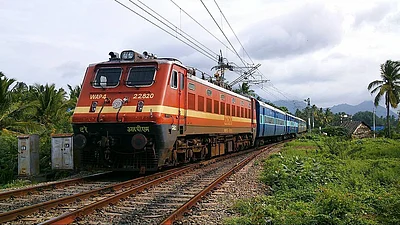

AILRSA, one of the largest unions of locomotive pilots and assistant pilots in the country, will go on a 48-hour hunger strike across the country from December 2, 2025, against what it alleges to be years of neglect, unsafe working conditions, and non-adherence to mandated rest periods. Though symbolic, the protest remains non-disruptive to trains’ operational work, but it underlines the growing stress, fatigue, and burnout amongst India’s frontline railway staff-the workforce powering the world’s fourth-largest railway network.
The union said the strike is to draw the attention of the Railway Board, Ministry of Railways, and the central government towards the “alarming deterioration” of working conditions. According to AILRSA, inadequate rest, an increasing workload due to manpower shortages, and enhanced safety risks are driving loco pilots to physical and mental exhaustion-which may eventually affect public safety.
Violation of Compulsory Rest Hours
Central to the protest is one of the most enduring demands of the union: implementation of legally mandated rest hours. The Railway Act and existing operational rules recommend a minimum of 16 hours of rest after long runs and a weekly rest of 30 hours for running staff. However, AILRSA claims these norms are regularly overlooked, especially in busy divisions where train movement is dense.
Loco pilots say that they are routinely compelled to work for hours continuously without rest, and refusal may invite disciplinary action. The long hours, combined with unpredictable running schedules, affect not only their health but also their performance on duty — a concern which could have implications for the safety of trains.
Workforce Shortages Adding Pressure
Over the last few years, the rail traffic in India has increased, with expansion of freight operations, improvement in passenger connectivity, and the addition of new trains. However, the sanctioned posts for locomotive pilots have not increased as much. Many thousands of posts are vacant in various divisions, the union informs, citing that the existing staff has to bear additional loads of responsibility.
With less staff, drivers are often worked back-to-back and may even be scheduled on consecutive nights. It is also understood that night operations are extremely demanding because visibility is poor, trespassing incidents are common, and a great deal of alertness is required at signals and crossings.
Increasing Workload and Safety Risks
According to AILRSA, the technological changes and operational restructuring have added new layers of responsibility to the job. While modern trains have brought in efficiency, they require high cognitive alertness; loco pilots are faced with heavier train loads, congested routes, more automated signals, and frequent speed restrictions.
Besides, loco pilots will naturally be the first to bear the brunt of track trespassing, cattle run-over, and signal malfunctioning — all three being incidents that present not only safety risks but also psychological pressure.
It further argues that while risk factors are increasing, appropriate support systems have not been implemented. The pilots asserted that improved cab ergonomics, mental health support, periodic health checks, and upgraded training all will remain crucial to keep pace with the changing operational environment.
Demands: Safety, Fair Allowances, and Better Working Conditions
Besides implementation of rest hours, the other demands of the union are:
Limit the daily duty hours to no more than 8 hours.
Ensuring 46 hours of weekly off.
Filling vacancies for both pilots and support staff
Fair and timely allowances including night duty and traveling allowances
Restrictions on successive night shifts
A transparent and humane transfer and promotion policy
The union also criticizes the exclusion of loco pilots from certain newly introduced allowance revisions, stating that the compensation structure needs to reflect the highly risky nature of the job.
Symbolic Strike, No Disruption to Train Services
In a significant assurance, AILRSA has elucidated that the hunger strike will not disrupt the movement of trains. The protest will be vocal without affecting passengers or the national rail network. The union termed the protest as a “collective cry for justice,” urging immediate action from the authorities before the issues escalate.
A Test of Responsiveness of Railway Administration As India continues to expand its ambitions for railways — including high-speed corridors and high-technology trains — the workforce that drives these locomotives day and night forms the backbone of the system. The strike serves as a reminder that modernization cannot be pursued without balancing welfare. Whether the hunger strike will push the Railway Board and policymakers to more meaningfully engage with running staff remains to be seen. But one thing is clear: the loco pilots’ demands strike at the heart of employee welfare and public safety alike, making this a matter of national importance.