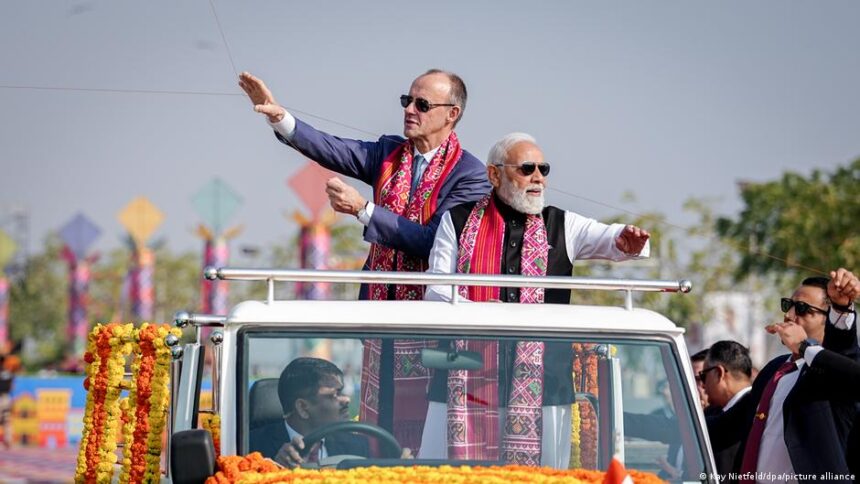

German Chancellor Friedrich Merz Visits Bengaluru on Day Two of India Tour
German Chancellor Friedrich Merz arrived in Bengaluru on Tuesday as part of the second and final day of his official visit to India. His stop in the country’s technology capital highlights the growing focus on innovation, advanced research, and industrial collaboration between India and Germany.
This visit comes a day after Merz held high-level talks with Prime Minister Narendra Modi, during which both nations signed several key agreements aimed at strengthening bilateral ties. From defence and education to telecommunications and technology, the visit signals a renewed push to deepen cooperation across critical sectors.
Bengaluru on the Global Diplomatic Map
Why Bengaluru Matters
Bengaluru, often called the Silicon Valley of India, has become a natural destination for global leaders looking to understand India’s technology and innovation ecosystem. By choosing Bengaluru as part of his first Asia visit as German chancellor, Friedrich Merz has underlined the city’s growing importance in global research, manufacturing, and digital development.
The visit is also symbolic of Germany’s interest in India’s talent pool, startup culture, and research institutions, which are increasingly seen as key partners in shaping future technologies.
Visit to Bosch India Headquarters
Strengthening Industrial and Technology Ties
One of the key stops on Merz’s Bengaluru itinerary is the India headquarters of Bosch, the German multinational engineering and technology company, located in Adugodi. Bosch has a long-standing presence in India and plays a major role in sectors such as automotive technology, mobility solutions, industrial automation, and smart manufacturing.
By visiting Bosch’s Indian operations, Merz is expected to gain first-hand insight into how German companies are leveraging India’s engineering talent and market scale. The visit also reflects the broader push for closer industrial collaboration between the two countries, particularly in areas like advanced manufacturing, clean mobility, and digital transformation.
Exploring Cutting-Edge Research at IISc
Visit to the Centre for Nano Science and Engineering
Following his stop at Bosch, the German Chancellor will head to the Indian Institute of Science, one of India’s most prestigious research institutions. At IISc, Merz is scheduled to visit the Centre for Nano Science and Engineering, a hub known for its work in nanotechnology, materials science, electronics, and healthcare applications.
This visit highlights Germany’s interest in collaborating with India on frontier technologies. Nanoscience is seen as a critical area for future innovation, with applications ranging from semiconductors and renewable energy to medicine and defence.
The focus on IISc also ties in with one of the agreements signed earlier, which aims to expand cooperation in higher education and research between the two nations.
First Asia Visit as German Chancellor
A Strategic Choice
This trip marks Friedrich Merz’s first visit to Asia since taking office as German chancellor. Choosing India as a key destination reflects the strategic importance Berlin places on New Delhi as a long-term partner.
With global supply chains shifting and geopolitical dynamics evolving, Germany sees India as a reliable partner for economic growth, technological collaboration, and regional stability.
High-Level Talks with Prime Minister Narendra Modi
Key Discussions in Ahmedabad
On Monday, Merz met Prime Minister Narendra Modi in Ahmedabad, where the two leaders held detailed discussions on a wide range of issues. These talks focused on boosting bilateral cooperation across defence, trade, technology, education, and telecommunications.
The meeting resulted in the signing of 19 agreements, marking one of the most comprehensive outcomes of a Germany–India diplomatic engagement in recent years.
Major Agreements Signed During the Visit
Defence Industrial Collaboration Roadmap
One of the most significant outcomes of the talks was the signing of a roadmap for defence industrial collaboration. This agreement aims to enhance cooperation in defence manufacturing, technology sharing, and joint development projects.
The move aligns with India’s push for self-reliance in defence production and Germany’s interest in expanding its defence industry partnerships beyond Europe.
Higher Education and Research Cooperation
Another key agreement focuses on expanding collaboration in higher education. This includes greater student exchanges, joint research programs, and partnerships between universities and research institutions in both countries.
This agreement directly connects with Merz’s visit to IISc, reinforcing the emphasis on academic and scientific collaboration.
Telecommunications Sector Engagement
A separate pact was signed to strengthen engagement in the telecommunications sector. With rapid advancements in digital infrastructure, 5G, and emerging technologies, this agreement aims to foster closer cooperation in innovation, regulation, and industry partnerships.
Cultural and Symbolic Engagements in Gujarat
Tribute at Sabarmati Ashram
Before arriving in Bengaluru, Merz and Modi visited the Sabarmati Ashram in Ahmedabad, where they paid homage to Mahatma Gandhi. The visit reflected shared values such as peace, non-violence, and democratic principles.
Kite Festival and Heritage Visit
The two leaders also inaugurated Gujarat’s famous kite festival, offering a glimpse into India’s cultural traditions. Merz later visited Adalaj Ni Vav, a historic stepwell near Gandhinagar, highlighting the cultural dimension of the visit alongside political and economic discussions.
What Merz’s Bengaluru Visit Signals
Focus on Technology and Innovation
By prioritizing visits to Bosch and IISc, Merz’s Bengaluru schedule sends a clear message. Germany is keen to work closely with India in areas that will define the future, including advanced manufacturing, deep tech, and scientific research.
A Long-Term Partnership Approach
Rather than limiting the visit to diplomatic meetings, the inclusion of industry and academic institutions shows a long-term approach to partnership. It reflects a desire to build connections at multiple levels, from government and industry to research and education.
India–Germany Relations at a Turning Point
The visit comes at a time when both countries are looking to diversify partnerships and strengthen economic resilience. For India, Germany represents a gateway to deeper engagement with Europe’s industrial and technological ecosystem. For Germany, India offers scale, talent, and growth opportunities that are difficult to ignore.
Bengaluru’s role in this visit underlines how cities, not just capitals, are becoming central to global diplomacy.
What Comes Next After Bengaluru
After completing his engagements in Bengaluru, Friedrich Merz is scheduled to depart from the city, bringing his two-day India visit to a close. However, the agreements signed and the discussions held are expected to shape India–Germany relations for years to come.
The focus now shifts to implementation, as both sides work to turn signed pacts into tangible outcomes across defence, education, technology, and industry.
Final Thoughts
German Chancellor Friedrich Merz’s visit to Bengaluru is more than a routine diplomatic stop. It reflects a deeper shift toward technology-driven partnerships and people-to-people collaboration between India and Germany.
From high-level political talks to hands-on engagement with industry and research institutions, the visit showcases a shared vision for the future. As global challenges grow more complex, such partnerships could play a crucial role in shaping innovation, security, and economic growth.