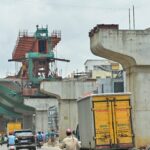
The much-delayed Suburban Rail Project in Bengaluru is all set to get a fresh lease of life with the government appointing a full-time Managing Director for K-RIDE, the joint venture agency entrusted with the project’s execution. More than three years after its formation without a full-time head, this move is being seen as a major turning point for the project plagued by inordinate delays, fragmented decision-making, and growing public pressure.
The suburban rail system, valued at roughly ₹15,000 crore, is designed to provide fast, affordable, and efficient connectivity across Bengaluru’s growing metropolitan region. For a city battling some of the worst traffic congestion in the world, the arrival of a full-time MD brings renewed hope that long-pending targets may finally start moving on schedule.
A Leadership Gap Finally Closed
One of the most persistent challenges for K-RIDE has been the lack of administrative continuity. In the absence of a full-time MD, the project was managed by interim officials, all of whom were managing big assignments of their own. This divided attention often delays approvals for tenders, land acquisition, contractor selection, and coordination with multiple departments such as Railways, BBMP, BMRCL, and Urban Development.
The project is expected to see stronger focus, quicker decisions, and better inter-departmental communication with a dedicated MD now assuming the mantle of affairs. Officials argue that this move will help streamline procurement, mobilize contractors faster, and remove longstanding bottlenecks that have delayed progress at the ground level.
Why This Appointment Matters Urgently
The suburban rail system has been part of Bengaluru’s transport vision for decades, but real progress has been sporadic. Meanwhile, the city’s population has grown rapidly, vehicle density has skyrocketed, and commutes have become longer and more unpredictable. A few studies show that Bengaluru residents waste hundreds of hours every year stuck in traffic, particularly in dense corridors like Whitefield, Outer Ring Road, Hebbal, and Silk Board.
The suburban rail network of four corridors and 148 km is to serve as a dependable alternative. Planned routes:
Baiyappanahalli–Chikkabanavara
KSR Bengaluru–Devanahalli (Airport direction)
Heelalige–Rajanukunte
Kengeri–Whitefield expansion
These routes are strategically planned to interlink the city’s core with fast-growing peripheral zones while seamlessly integrating into Namma Metro, BMTC, and Indian Railways.
Current Status and Anticipated Speed-Up
While the initial groundworks of some stretches were undertaken with soil testing and tendering, the project has seen slow execution. The main hurdles are delays in land acquisition, shifting of utilities, which also encompasses power cables, pipelines, and optical fiber networks, and poor coordination by contractors. The lack of stable leadership added to these delays, as many issues required quick escalation or cross-department intervention.
The appointment of a full-time MD is expected to:
Acquisition of land, compensation-period acceleration
Accelerate utility shifting with better coordination
Enhance financial planning and fund release cycles
Push contractors to adhere to stricter timelines
Improve communication with central railway authorities
Provide transparency and accountability in progress tracking.
With this kind of leadership structure, experts predict that visible progress may be realized across many corridors within the next year.
Transforming Bengaluru’s Mobility Landscape
Suburban rail is considered essential for Bengaluru’s long-term mobility by urban planners and commuter groups. The Metro may serve intra-city routes, but suburban rail covers longer distances across district boundaries and will service officegoers, students, and workers going between the outer zones and city centre.
Operational, the system could help reduce:
Traffic congestion by 10–15%
Dependence on private vehicles
Carbon emissions and pollution
Travel time for daily commuters
Pressure on road infrastructure
Equally important, suburban rail can stimulate economic growth by improving connectivity to IT hubs, industrial clusters, residential townships, and emerging airport-linked corridors.
A New Phase of Accountability and Progress
The move to appoint a full-time MD has been welcomed by citizens, mobility experts, and activists, who have been demanding for so long a dedicated leadership. Many now believe that this would finally give direction, accountability, and urgency to one of the city’s biggest transformational infrastructure projects. The suburban rail of Bengaluru enters the most critical phase as the new MD prepares to take up responsibility-one wherein effective leadership may determine the pace and success of the entire network. As expectations are rising with renewed clarity in administration, the city may be on track to experience a modern, efficient suburban rail system that has been expected for decades.