
Bengaluru, the technology and innovation hub of India, is all set for an upgraded transport infrastructure as the authorities fast-track the long-pending Ejipura Flyover project and the ambitious Bengaluru Suburban Rail Project. Both these projects will finally give citizens smoother mobility after years of rapid urban expansion and help ease the notorious traffic congestion in Bengaluru.
Ejipura Flyover: Long-Awaited Relief for Traffic Bottlenecks
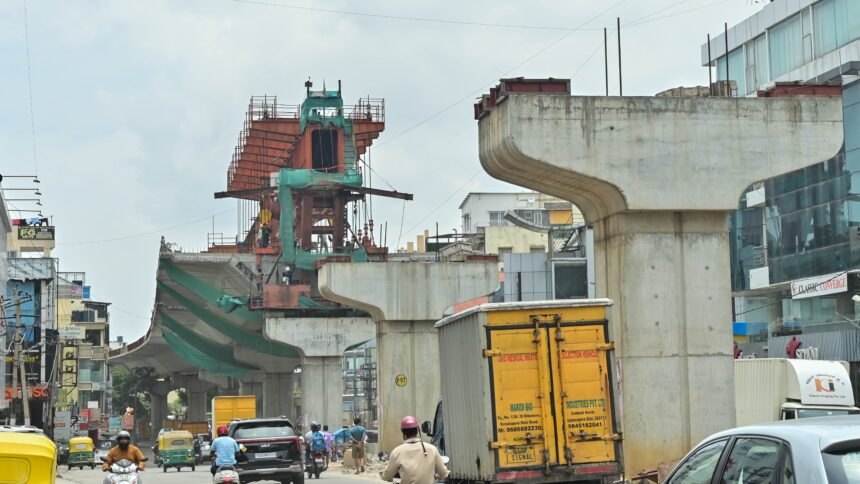
The Ejipura Flyover has remained an infrastructure dream for lakhs of commuters who travel between Koramangala, Ejipura, and the Inner Ring Road for almost a decade, as the project often saw delays regarding land acquisition, contractor delays, and administrative changes. Today, however, renewed momentum is seen at the 2.5-kilometre flyover, with project authorities confirming that construction has reached approximately 63.5% completion.
Once operational — currently targeted for June 2026 — the flyover is expected to considerably ease the traffic congestion on one of the city’s most clogged corridors. The stretch sees an endless queue of vehicles due to its narrow lanes and mixed traffic, including the overflow from nearby commercial hotspots like Sony World Junction and 100-Feet Road.
Engineers connected with the project said that the latest progress comes after better coordination between the BBMP, traffic police, and utility agencies that needed to relocate underground pipelines and electricity lines. This has traditionally been one of the biggest roadblocks for the flyover’s development. With the hurdles mostly sorted, project teams have been able to maintain steady construction flow over the last quarter.
With the flyover at last complete, optimism is cautiously returning for residents and commuters. Many have argued that completion of the flyover could even lead to a redistribution of traffic load, hence offering shorter travel times between prime residential and tech-employment zones like Koramangala, EGL, and Indiranagar. Local businesses-from cafes to boutiques to co-working spaces-say decongestion will help revive footfall and improve overall accessibility.
Bengaluru Suburban Rail Project Gets a Leadership Boost
While the Ejipura Flyover works inch forward, another high-impact mobility project has been thrust back into the spotlight: the Bengaluru Suburban Rail Project (BSRP). First, the big news: senior engineer and veteran railway technocrat Lakshman Singh has been appointed as the new Managing Director of K-RIDE – the joint venture overseeing the suburban rail initiative.
Singh is best known for preparing the original feasibility studies that shaped the modern blueprint for suburban rail connectivity in Bengaluru. His appointment is being viewed by many as a strategic move to revive the highly-anticipated project, which has been delayed due to regulatory approvals, complexities in land acquisition, and coordination between multiple government agencies.
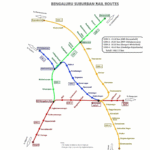
Given the exploding population of Bengaluru, its daily traffic density, and overstretched road network, the suburban rail project is likely to be a game-changer. It will connect major residential and employment hubs across the city through four corridors stretching over 160 kilometres. When ready, the rail network could enable faster, safer, and more sustainable public transport for lakhs of daily commuters, reducing dependence on private vehicles.
According to experts, Singh’s deep knowledge of railway systems, along with his hands-on experience in the planning of suburban mobility, would speed up coordination with Indian Railways, state departments, and private contractors. This leadership change is expected to bring sharper execution focus at a time when Bengaluru urgently needs scalable transit solutions.
A step closer to a more connected Bengaluru
Both the Ejipura Flyover and the suburban rail project represent much-delayed steps toward addressing the infrastructural strain of one of India’s fastest-growing metropolitan regions. Bengaluru’s residents often say with a chuckle that traffic is the city’s “second weather,” but the frustration is real: it costs time, productivity, and quality of life.
Recent progress suggests that implementation has become much more proactive. If the projects are completed on time, they could fundamentally reshape daily travel patterns, open access to mobility in previously neglected zones, and give the city a more resilient transportation backbone. For now, citizens remain watchful, hoping the momentum continues — and that Bengaluru’s infrastructural vision finally matches its economic and global ambitions.